The Definitive Guide to Music Libraries in 2026: Software, Tools, and Workflows for Advanced Listeners
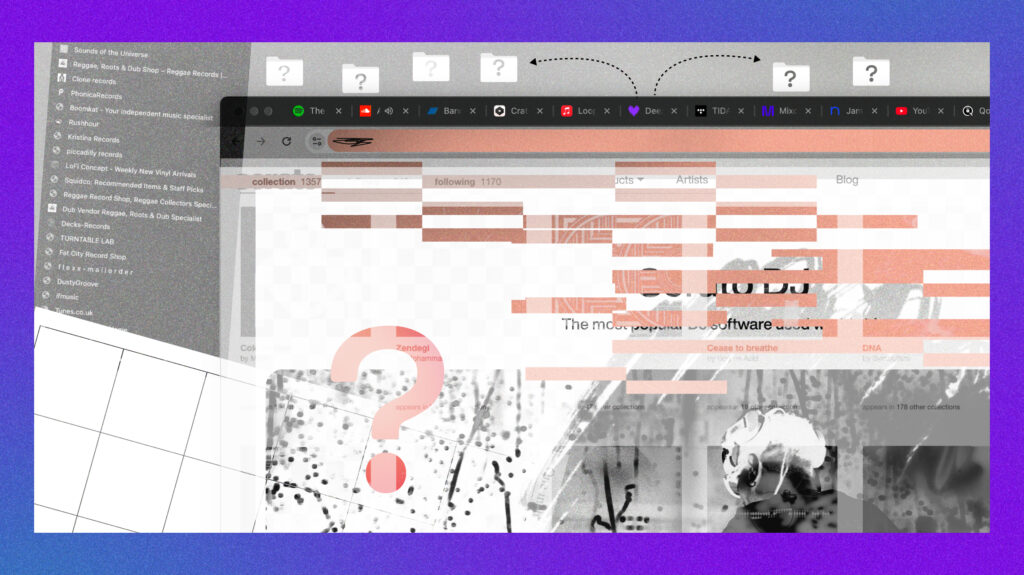
If you’re a serious music listener in 2026, chances are you’re juggling several different tools and platforms to manage your listening life.
Streaming services may provide instant access to massive catalogs, but managing and organizing a personal music library across platforms remains difficult for many. Platforms like Bandcamp allow independent artists and labels to self-publish and listeners to buy music directly. SoundCloud hosts mixes and DJ sets that don’t always exist elsewhere. Many listeners maintain personal file collections amassed over years that streaming platforms don’t really serve. DJ software, meanwhile, is focused on mixing and performance rather than everyday listening and digging.
Each of these tools solves part of the experience, but none of them fully replaces the others. As new platforms appear and habits evolve, listeners face recurring questions: should we continue maintaining file collections, or rely entirely on streaming? How should playlists and personal libraries be backed up and preserved? Is there a unified place where all music activity can live, or do we simply adapt to each platform and accept that our data is lost when services change or disappear?
For many, maintaining a coherent library remains essential. Convenience can be built on top of that foundation, but without a stable core, music becomes scattered across accounts, apps, and devices. Good metadata matters. A clear user experience matters. And most importantly, the tools should not get in the way of listening itself – or reduce music exploration to managing platforms and subscriptions.
At the same time, data portability rarely exists in practice. What keeps listeners inside a platform is not access alone, but the experience built around it. Playlists, recommendations, listening history, and social context are often difficult to move elsewhere, creating subtle forms of lock-in.
This guide looks at the tools people actually use to manage music today – streaming services, music-download platforms, personal library managers, DJ software, and newer attempts to bridge these worlds. The goal is not to recommend a single solution, but to understand how each approach fits into modern music-collecting workflows, what problems remain unresolved, and how listeners can make sense of the ecosystem as it exists now.
1. What Modern Listeners Actually Need from a Music Library
Before comparing platforms, it helps to clarify what listeners actually expect from a music library today.
For listeners who actively discover, collect, and organize music across platforms, a few needs tend to appear consistently:
- A unified collection across time and sources — bringing together streaming libraries, purchases, personal files, playlists, bookmarks, and listening history so a listener’s musical journey is not scattered across services and devices.
- Flexible organization and navigation — the ability to search, tag, filter, and organize music using reliable metadata and personal categories so collections remain easy to explore as they grow.
- High sound quality without compromise — allowing listeners to enjoy streaming convenience while still benefiting from high-quality files they own when available.
- Access to and control over one’s data — the ability to export libraries, use add-ons or APIs, connect other software, and work with the full range of personal data instead of being locked into one ecosystem.
- A library that persists with minimal maintenance — syncing, backups, and access across devices should work reliably without turning library management into ongoing manual work.
- Discovery and social exploration — helping listeners find new music and learn from others while still supporting personal taste and independent exploration.
2. Streaming Platforms in 2026
Streaming services are now the default way people access music. They provide massive catalogs, cross-device playback, and easy discovery, but they are not designed to function as permanent personal libraries.
Catalog differences between services are now relatively small for mainstream music, but organization, file integration, and data portability remain limited across platforms. This is why many listeners complement streaming with dedicated music library software for their owned files.
Below is a practical overview of how major services compare in real-world use.
Spotify — Web, macOS, Windows, iOS, Android • ~€9–12/month
Best for: mainstream catalog access and easy playlist-based listening across devices.
Could be better: organization remains playlist-centric, personal file support is weak, and libraries stay locked inside the platform; artist compensation and ecosystem ethics remain controversial.
Apple Music / iTunes — Web, macOS, Windows, iOS, Android • ~€10–11/month
Best for: users in the Apple ecosystem and those who still want partial integration of personal files via its iTunes-era library structure.
Could be better: local file management is no longer evolving, shifting focus to streaming.
YouTube / YT Music — Web, iOS, Android • included with YouTube Premium (~€12/month)
Best for accessing rare uploads, unofficial releases, vinyl rips, and content unavailable on other streaming platforms.
Could be better: library organization and file-management is minimal or weak.
TIDAL — Web, macOS, Windows, iOS, Android • ~€10–11/month
Best for listeners prioritizing high-quality audio streaming with mainstream catalog access.
Could be better: organization tools and personal file integration remain minimal.
Qobuz — Web, macOS, Windows, iOS, Android • ~€11–13/month
Best for high-quality streaming and download purchases, especially for listeners focused on album-oriented exploration.
Could be better: catalog breadth is slightly narrower in some genres, and library organization tools remain basic.
For completeness, other streaming services such as Amazon Music, Deezer, and Pandora (still widely used in the US for radio-style listening) continue to serve large audiences. While these platforms offer streaming catalogs and discovery features similar to larger global services, they are less commonly part of workflows focused on library ownership, DJ preparation, or long-term music collection management.
Observations
Streaming platforms excel at convenience and everyday access to music.
However, organization remains limited, personal files are only partially supported, and playlists and listening history are tied to subscriptions. As a result, many demanding listeners still rely on additional tools to maintain a library that reflects their long-term music history.
For listeners concerned about artist compensation and platform ethics, we’ve compared ethical music streaming alternatives in 2025 including fair-pay models and independent platforms.
3. Buying Music & Direct-to-Artist Platforms
While streaming dominates everyday listening, many devoted listeners still buy music. Purchasing music – especially directly from artists and labels – remains important both for ownership and for supporting the people who make the music.
Platforms in this space don’t try to replace streaming. Instead, they complement it by allowing listeners to build collections that persist beyond subscriptions and catalog changes.
Main Direct-to-Artist Platforms
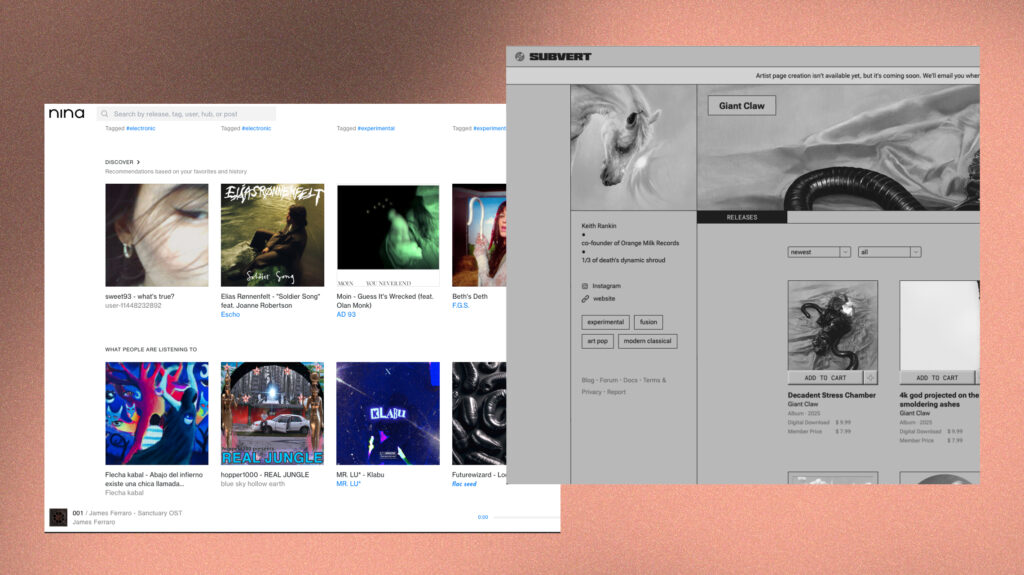
Bandcamp remains the most widely used platform for direct purchases. Artists and labels can self-publish music, sell downloads and physical releases, and connect directly with fans. For listeners, it functions as both a discovery platform and a place to build a personal collection that can be downloaded and preserved.
Nina explores decentralized distribution models, giving artists new ways to distribute and monetize music while allowing listeners to support releases more directly.
Subvert focuses on independent and underground scenes, emphasizing fair artist compensation and community-driven discovery. It appeals particularly to listeners who want alternatives to mainstream distribution models.
Bandcamp and Nina interfaces showing independent music releases and direct artist support
What These Platforms Offer Listeners
- The ability to own music files, not just stream them
- A way to support artists and labels directly
- Access to releases that may never appear on mainstream streaming services
- A more curated or scene-driven discovery experience
Where Limitations Remain
- Advanced library management tools
- Seamless cross-device playback experiences
- Unified integration with streaming libraries
- Strong playlist or listening-history features
As a result, listeners often discover music through streaming, purchase important releases through direct platforms, and then manage those files elsewhere.
This reinforces a pattern already visible: no single tool currently covers access, ownership, and organization at once, leading listeners to combine services.
4. Personal Files & Library Managers
Personal files remain the most stable foundation of many long-term music libraries. These tools help listeners organize, browse, and play music they own, often alongside streaming services.
Below is a compact overview of commonly used options.
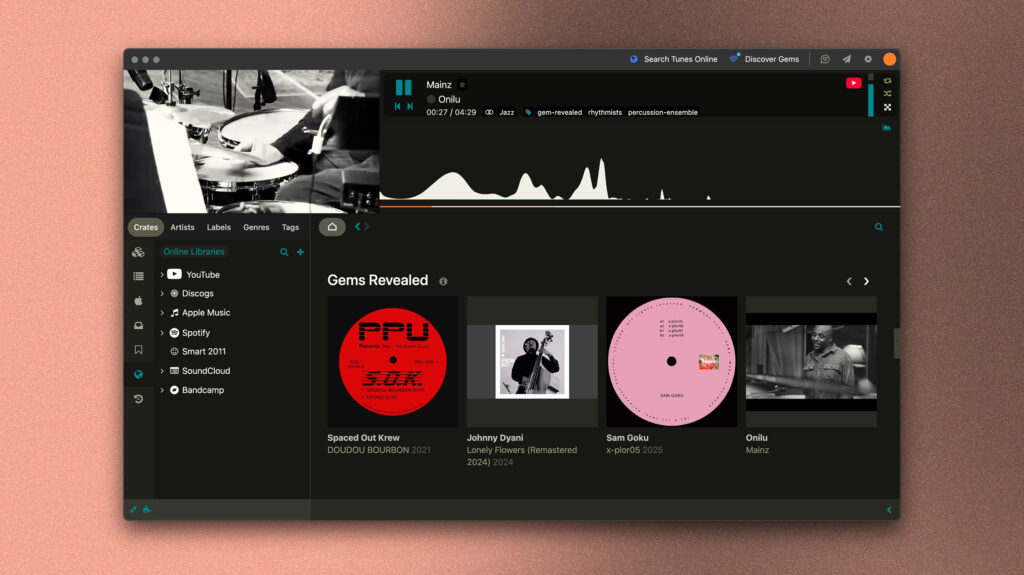
Crates — macOS, Windows, iOS (Android) • €30 one-off + optional upgrades
Best for: listeners who want the broadest coverage across unified libraries, openness/interoperability, and privacy.
Could be better: mobile experience, cloud sync, and overall polish are still in progress.
MusicBee — Windows only • Free
Best for: deep local library management with a mature feature set and strong control over organization.
Could be better: legacy UI and Windows-only, with no unified streaming layer or social/discovery features.
MediaMonkey — Windows, Android • $40 (Gold) or $100 lifetime
Best for: large file libraries where you want robust library control and long-standing, proven workflows.
Could be better: legacy UX design, no streaming integrations, and no social features.
Plex / Plexamp — Win/macOS/Linux, iOS/Android • ~$70/year or ~$120 lifetime
Best for: self-hosted personal media libraries primarily for video, with great cross-device streaming.
Could be better: limited music-specific integrations; not strong on customization and not privacy-oriented.
Roon — Win/macOS/Linux, iOS/Android • $829.99 lifetime
Best for: audiophiles who want a premium, metadata-rich listening environment with a modern UI.
Could be better: expensive and often implies dedicated hardware; limited openness/interoperability and no real social layer.
Swinsian — macOS only • $35
Best for: focused local playback and library management in a lightweight macOS app.
Could be better: macOS-only, no unification with streaming, and limited modern ecosystem features.
Other tools still used by parts of the community include JRiver Media Center, a long-standing all-in-one media manager popular among power users with large local collections; Audirvana, focused primarily on high-quality playback for audiophile listening rather than deep library management; Strawberry Music Player, an open-source player appreciated especially by Linux users; Winamp, the classic player still maintained and nostalgic for many long-time listeners; foobar2000, widely used by advanced users thanks to its deep customization and plugin ecosystem; Navidrome, a lightweight self-hosted music server often used as an open-source alternative to commercial streaming-from-home setups; and Jellyfin, an open-source media server similar to Plex that some users rely on for managing and streaming personal music collections. These tools are less central to modern cross-device workflows but remain popular in specific self-hosted, legacy, or power-user environments.
5. DJ Software & Performance Libraries
DJ software serves a different purpose from listening libraries. These tools are designed for performance and preparation rather than long-term music organization or discovery.
For DJs, the library becomes part of the performance workflow: tracks are analyzed, prepared with cues and loops, and organized for live mixing. Reliability and performance features matter more than metadata depth or unified listening across sources.
However, many DJs end up maintaining two parallel libraries: one for everyday listening and discovery, and another optimized for performance.
Main DJ Library Platforms
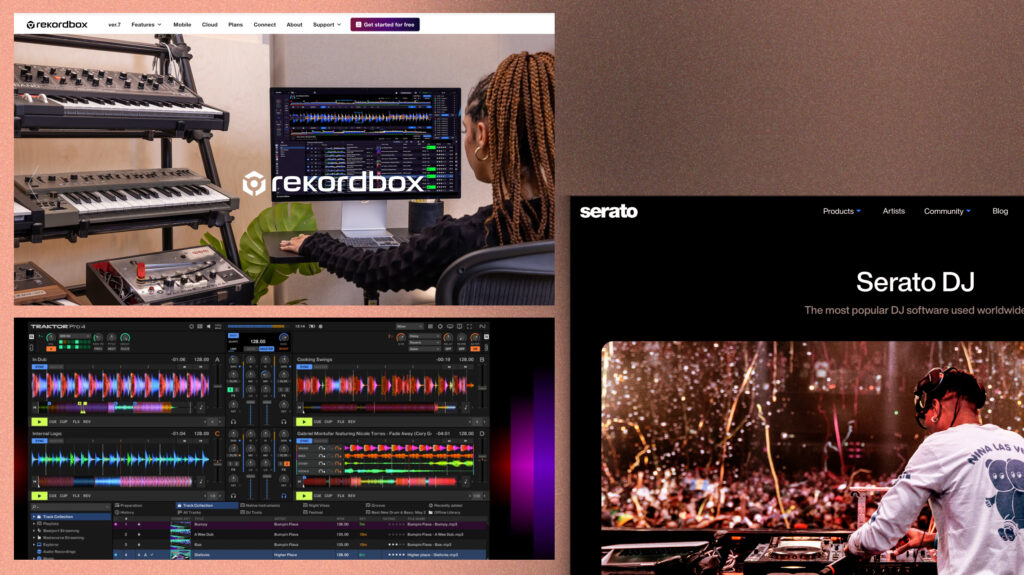
Rekordbox — macOS, Windows • ~€276 license or subscription tiers
Best for: DJs using Pioneer/Alpha Theta equipment, with strong preparation workflows and widespread club adoption.
Could be better: optimized for performance rather than day-to-day library management, with limited discovery or unified listening features.
Serato DJ — macOS, Windows • hardware unlock or subscription/license
Best for: performance reliability and broad controller support, widely trusted by working DJs.
Could be better: library tools focus on performance preparation, not long-term music organization or unified collections.
Traktor Pro — macOS, Windows • one-time license purchase
Best for: DJs who prefer creative mixing workflows and advanced performance control.
Could be better: ecosystem momentum and hardware integration are weaker compared to more dominant platforms.
Lexicon DJ — macOS, Windows • ~€400 license
Best for: DJs managing libraries across multiple DJ platforms and preparing collections ahead of performance.
Could be better: niche adoption and pricing, with limited everyday listening functionality.
Beyond the most widely used DJ ecosystems, several other platforms remain popular across different scenes and workflows. VirtualDJ continues to have one of the largest global user bases thanks to broad controller support and flexible performance tools, often serving both beginners and professionals. Algoriddim djay is widely used on macOS, iOS, and mobile devices, bringing DJ workflows to more casual and portable setups with strong streaming integrations. Mixxx remains the leading open-source DJ platform, valued by hobbyists and community-driven users. Engine DJ, powering Denon DJ standalone hardware, is increasingly used in performance environments outside Pioneer ecosystems.
While adoption varies by region and scene, these platforms show how DJ workflows continue to evolve alongside listening and collection management tools.
Observations
DJ tools excel at:
- Performance preparation
- Track analysis and cue management
- Reliable live playback
- Hardware integration
But they are rarely ideal for:
- Everyday listening, especially albums, mixes and non-DJ music
- Discovery and social features
- All-encompassing music organization
As a result, DJ software typically enters the workflow late – once music has already been selected, organized, and prepared elsewhere.
6. Discovery & Social Listening Platforms
Before music reaches personal libraries, it is usually discovered elsewhere. In 2026, discovery happens across many platforms: mixes, social feeds, newsletters, playlists, communities, and recommendation engines.
Unlike streaming services or library managers, discovery platforms often focus less on collection building and more on exploration, sharing, and scene participation. The challenge for listeners is that music found this way rarely flows cleanly into a unified library.
Main Discovery & Social Listening Platforms
SoundCloud — Web, iOS, Android • Free + paid tiers
Best for: discovering DJ mixes, underground releases, edits, and emerging artists often unavailable on mainstream streaming services.
Could be better: library organization is minimal, and long-term collection management is weak.
Mixcloud — Web, iOS, Android • Free + paid tiers
Best for: curated DJ shows and radio-style programming where tracks are discovered through mixes rather than individual releases.
Could be better: limited direct interaction with tracks, making it harder to move discoveries into personal libraries.
Last.fm — Web • Free (with ads; optional paid tier)
Best for: tracking listening history across platforms and building a long-term musical profile based on scrobbling.
Could be better: playback is weak, library management is minimal, many social features have been removed; adoption has declined
Bandcamp — Web, iOS, Android • Free platform, music purchased individually
Best for: discovering independent artists and labels by browsing what other people purchase.
Could be better: library customization, filtering, and browsing tools are limited, limited interoperability
Observations
Discovery platforms excel at:
- Surfacing new music and scenes
- Providing access to rare or niche content
- Supporting artist and community engagement
But discoveries made here often remain:
- Scattered across bookmarks, playlists, and accounts
- Difficult to organize long-term
- Detached from personal music libraries
This creates a recurring friction: listeners constantly rediscover music they once found but never properly integrated into their collections.
Summary – The State of Things
Music listening has never been easier, yet managing music has rarely felt more fragmented. Most listeners now juggle multiple platforms at once: streaming services for access, Bandcamp or similar platforms for purchases, discovery through mixes and social feeds, personal files accumulated over years, and sometimes separate DJ or performance tools.
The result is a constant switching between apps and browser tabs, with libraries, playlists, bookmarks, and listening history scattered across services. Ownership and control vary depending on platform policies, catalog changes, or subscription status. Metadata and organization rarely stay coherent across systems, and discoveries often disappear into forgotten playlists or saved links.
Instead of feeling like a personal music space, listening can start to feel like navigating between disconnected tools – it feels chaotic. Many listeners end up crafting their own improvised workflows just to keep their collections usable over time.
Looking Ahead – What Listeners Need Next
Looking forward, the challenge is not adding more platforms but reducing fragmentation and increasing interoperability between them.
Listeners increasingly want a music setup that feels like their own: a coherent library that combines sources, preserves listening history, and adapts as habits evolve. They want control over their data, the ability to customize workflows, and tools that allow social interaction, discovery, organization, and listening to coexist without friction.
The future of music libraries likely depends less on replacing existing services and more on making them work together – so listeners can spend less time managing platforms and more time enjoying music.
Ultimately, the best music library is the one that works for your listening habits—whether that’s streaming everything, carefully curating files, or somewhere in between.